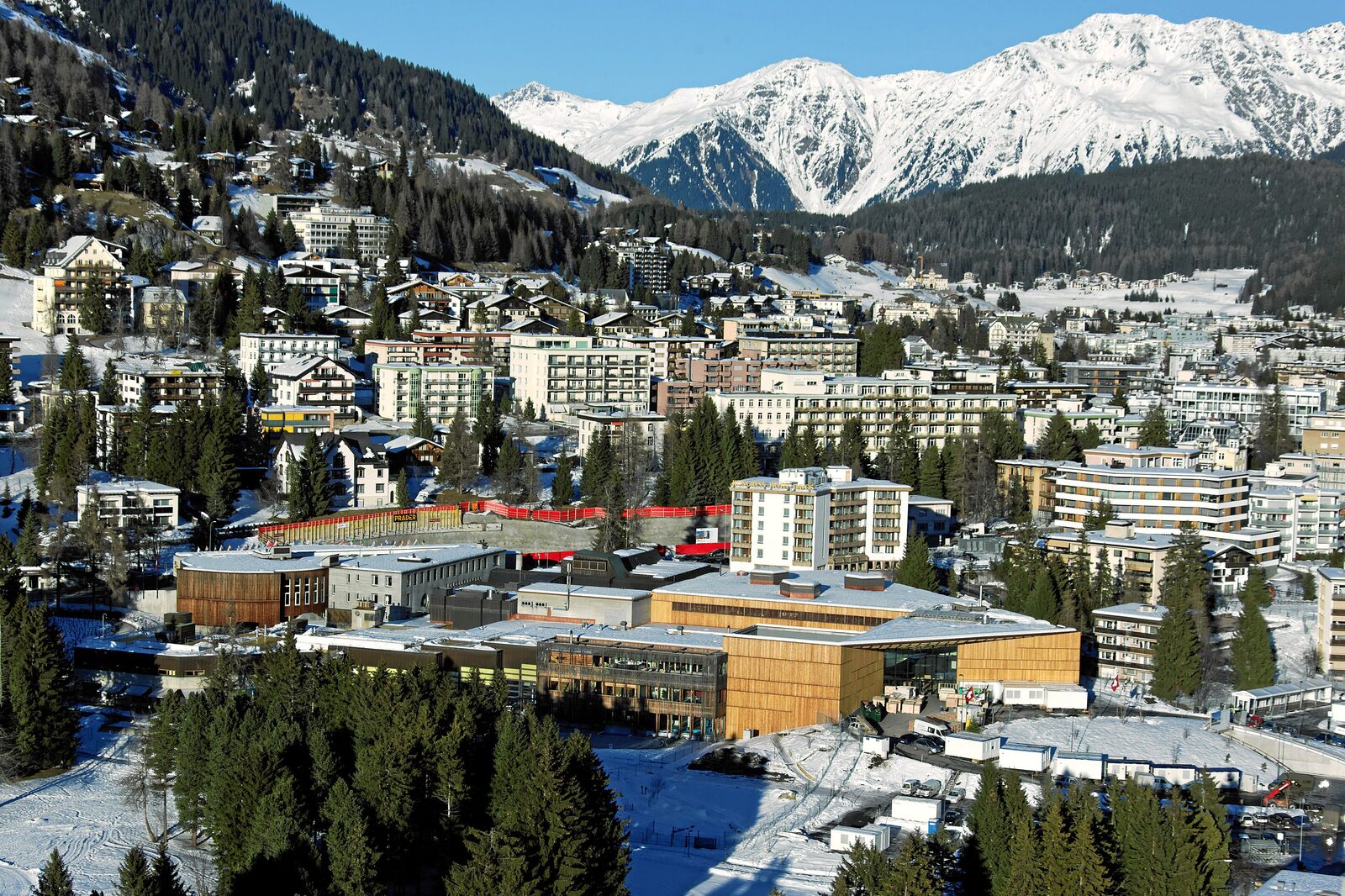

Davos is a small town in the Swiss Alps, about eleven thousand people, better known for skiing than for policy. For one week every January it becomes something else. Heads of government, chief executives, central bankers, researchers and activists arrive for the Annual Meeting of the World Economic Forum. Shops on the main street are rented out as country houses and company lounges. The snow outside is lined with security fences.
Headlines tend to report the speeches. For a student of policy, the more interesting question is how the week is organised, and what that reveals about how global decisions get shaped.
What the Annual Meeting actually is
The Forum began in 1971 as the European Management Symposium, a gathering of business leaders. Today the Annual Meeting brings together roughly three thousand participants. It is invitation-only. Badges are issued by the Forum to its members, partners, governments and invited guests. Nothing is decided by vote, no treaty is signed, and no communiqué binds anyone.
So why does it matter? Because it is one of the few places where people who rarely share a room sit across a table for a week. Deals, partnerships and positions that later appear in budgets and policy papers are often first tested there.
Three things worth watching
The agenda before the meeting. Each year the Forum publishes a theme and, a week or two earlier, its Global Risks Report, a survey of what experts fear most over the next two and ten years. Read it in early January. You will see which ideas the organisers want on the table, and which they leave off.
The Promenade, not just the Congress Centre. Most of the week happens in side venues along the main street: country houses, company lounges, independent forums. Indian states and companies regularly take spaces there to meet investors. Watching who hosts whom, and which announcements follow, teaches more about economic diplomacy than any keynote.
What changes afterwards. Pick one theme, say AI governance, climate finance or skills, and follow it for three months after the meeting. Which statements turned into budget lines, regulations or partnerships, and which faded? That is the difference between a conversation and a policy.
What is open to the public
You do not need a badge to learn from Davos week. The Forum runs a free public programme, the Open Forum, where local residents and students, including Swiss high-schoolers, attend panel discussions. Independent houses and side events run their own sessions. For young people who want the inside of the meeting, the legitimate route is the Forum's own Global Shapers Community, which selects and sponsors a small number of members to attend.
A word of caution. The Forum publicly warns about fake offers to join its events "as part of a delegation". Any programme that promises Annual Meeting access for a fee deserves hard questions.
Where we stand
Our Global Immersion Program is planned as an immersion in Switzerland during Davos week. It is run by Darwin Dynamics and is independent of the World Economic Forum; it does not include Annual Meeting badges. What it offers is the week as a classroom: preparation in India, the public and independent sessions in Davos, and a policy brief each fellow writes and defends.
The useful skill is not getting into the room. It is reading what the room produces.